Sound, Community, and Brain Health

Sound, Community, and Brain Health
A Holistic Approach to Memory, Wellbeing, and Connection
By Moira Lo Bianco, MA, E-RYT 200, RYT-500, YACEP, BLS
Affiliation: Integro Sonoro; www.moiralobianco.com
Overview
This article explores how integrative practices—combining sound, breathwork, gentle movement, and community engagement—can support brain health, emotional wellbeing, and quality of life for individuals experiencing memory changes and their care partners.
Here’s what you’ll learn in this article:
- Integrative practices support cognitive and emotional health
Memory Café sessions bring together sound, mindfulness, breathwork, and gentle movement to enhance cognitive resilience, reduce stress, and foster meaningful social connection. - Sound and breath regulate the nervous system
Practices such as humming, toning, and mindful listening help slow the breath and activate the parasympathetic nervous system, supporting relaxation, emotional balance, and improved mood. - Movement and creativity strengthen brain function
Gentle chair-based exercises and memory-focused activities improve mobility, confidence, and cognitive engagement, aligning with research on mind-body practices and brain health. - Community and caregiving are central to wellbeing
Shared experiences reduce isolation and provide emotional support, highlighting the essential role of community and care partners in holistic approaches to brain health.
Integrative Practices for Memory and Wellbeing
In Boston, I have the joy of collaborating with the Age Strong Commission through their community initiative, the Memory Café. These gatherings are welcoming spaces where people experiencing memory changes, including those living with Alzheimer’s disease and other forms of dementia, come together with their care partners in a supportive, stigma-free environment. At the Memory Café, I guide sessions that weave together sound, mindfulness, breathwork, and gentle somatic movement. These practices invite participants to slow down, listen, breathe, and reconnect—with themselves and with one another. They also reflect what research is showing: simple lifestyle practices, like stress reduction, physical activity, and meaningful social engagement, can play an important role in supporting brain health and cognitive resilience (as highlighted by the Alzheimer’s Association and the National Institute on Aging).
My work here aligns with the prevention framework developed by the Alzheimer’s Research and Prevention Foundation (ARPF), including the work of Dharma Singh Khalsa, MD, and colleagues, which emphasizes multidimensional approaches to brain health. Stress management and movement are key pillars of this framework, and in our gatherings, they naturally come together through shared experiences of sound, breath, movement, and community.
The Healing Power of Sound, Breath, and Mindful Listening

Sound is one of the most human and accessible ways we can connect. In our sessions, participants explore mindful listening, as well as gentle vocal exercises like toning and humming.
These simple practices are closely tied to breath. When we hum or tone, the breath naturally slows and deepens, creating gentle vibrations that ripple through the chest, throat, and skull. Combined with steady, mindful breathing, these vibrations may stimulate the vagus nerve—a pathway of the parasympathetic nervous system—supporting relaxation, emotional balance, and resilience (The Polyvagal Theory).
There is something quietly magical that happens when a room begins to breathe together. As the breath settles into a shared rhythm, shoulders soften, faces relax, and a calm presence begins to emerge. People who may have arrived tense or uncertain often begin to settle into the moment. In these shared breaths, sound becomes more than something we hear—it becomes a collective experience that gently reconnects us with our bodies, our breath, and each other.
Research designed by ARPF supports these observations. Meditation practices that incorporate sound, such as chanting-based meditation, have been associated with improvements in memory, mood, and stress regulation in older adults experiencing subjective cognitive decline (Innes, Khalsa et al., 2016). Studies have also shown that meditation can influence biological pathways related to stress and inflammation, which may support healthy aging and cognitive function (Black, Khalsa et al., 2013).
For many participants, the most immediate benefit is simply the feeling of being present together in community.
Gentle Movement and the Wisdom of the Body
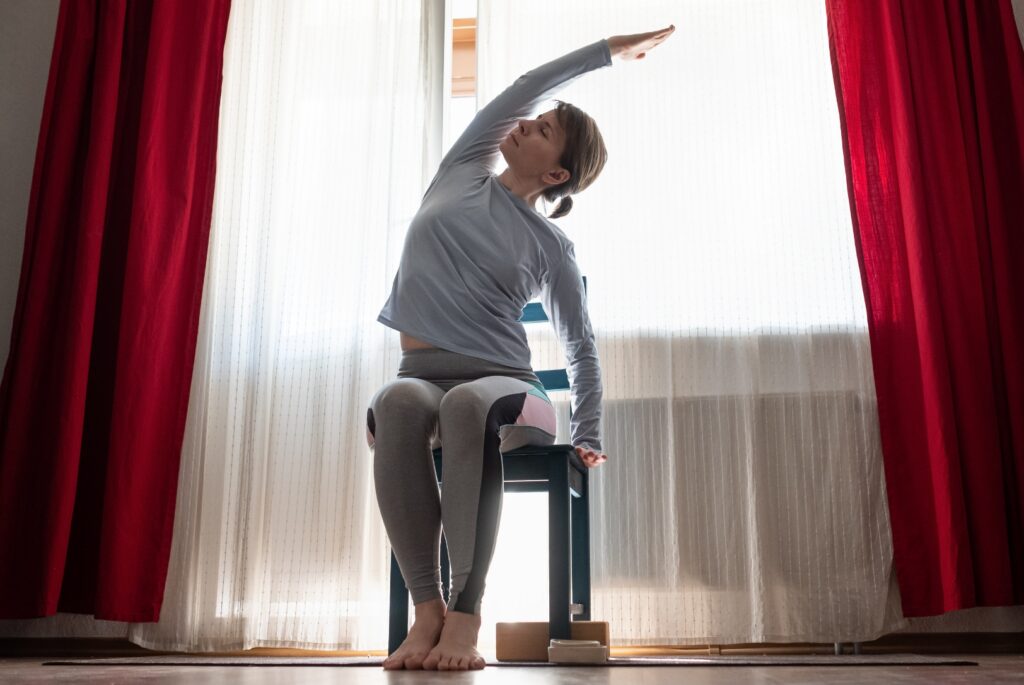
Alongside sound and mindfulness, we explore gentle movement. Chair yoga and functional exercises are designed to meet participants where they are physically, supporting mobility, balance, and strength.
As we age, changes in the body can challenge confidence in movement. Practicing simple movements together—lifting the arms, rotating the shoulders, coordinating breath with motion— helps participants reconnect with their bodies in a safe, nurturing space.
Research shows that mind-body practices like yoga benefit both physical and cognitive health in older adults. In one randomized controlled trial, older participants practicing yoga showed improvements in memory, reduced stress, and improved mood (Lavretsky, Khalsa et al., 2013). Brain imaging studies suggest that yoga may even influence connectivity in regions associated with memory and emotion regulation (Eyre, Khalsa et al., 2016; Kilpatrick, Khalsa et al., 2023). Beyond measurable outcomes, movement offers something deeply meaningful: the opportunity to experience the body not as a limitation, but as a living source of vitality and expression.
Memory, Creativity, and Brain Longevity
We also engage in memory-based activities to gently stimulate attention, recall, and engagement. Sometimes this involves remembering sequences of movement; other times, participants are invited to recall familiar sounds that carry personal meaning. Sound has a remarkable ability to evoke memories and emotions, even in individuals experiencing cognitive decline, activating neural networks connected to memory and emotional processing.
Research shows that cognitive stimulation programs can improve cognitive functioning and quality of life in individuals with dementia (Woods et al., 2012). ARPF-sponsored studies exploring meditation combined with music listening have also shown benefits for memory and cognitive performance among older adults with subjective cognitive decline (Innes, Khalsa et al., 2016).
In our sessions, these exercises are never tests. They are invitations to explore memory with curiosity and creativity. In doing so, they nurture what researchers often call brain longevity— supporting the brain through meaningful engagement, sensory experience, and joyful participation.
Honoring the Care Partner Journey

Care partners are at the heart of the Memory Café. Their dedication and compassion support their loved ones every day. Caregiving is deeply meaningful, but it can also bring stress and physical strain. Research shows that family caregivers often face elevated stress and health challenges (Schulz & Sherwood, 2008).
In our gatherings, care partners are invited to fully participate. They breathe with the group, hum alongside their loved ones, and move together. These shared moments create opportunities for rest, restoration, and connection. Additional studies spearheaded by ARPF have shown that meditation practices can reduce stress and depressive symptoms in caregivers while supporting cognitive and cellular health (Lavretsky, Khalsa et al., 2013).
Equally important is simply honoring the vital role care partners play. In our sessions, we hold space to acknowledge their resilience, compassion, and unwavering commitment.
Community as Medicine
While the physiological benefits of these practices are significant, there is another dimension that may be just as powerful: community.
Isolation is a common challenge for seniors, especially those living with memory changes, and for their families. Memory Cafés create spaces where people can gather without fear of judgment, laughter arises spontaneously, conversations unfold naturally. The shared experience of sound and movement reminds participants that they are not alone.
In these moments, community itself becomes medicine. This connection reflects the broader vision of integrative approaches to Alzheimer’s prevention and brain health, recognizing that wellbeing is shaped not only by biology, but also by emotional, social, and spiritual experiences (Khalsa & Newberg, 2021), work that further expands integrative and spiritual dimensions of brain health.
A Space for Presence and Humanity
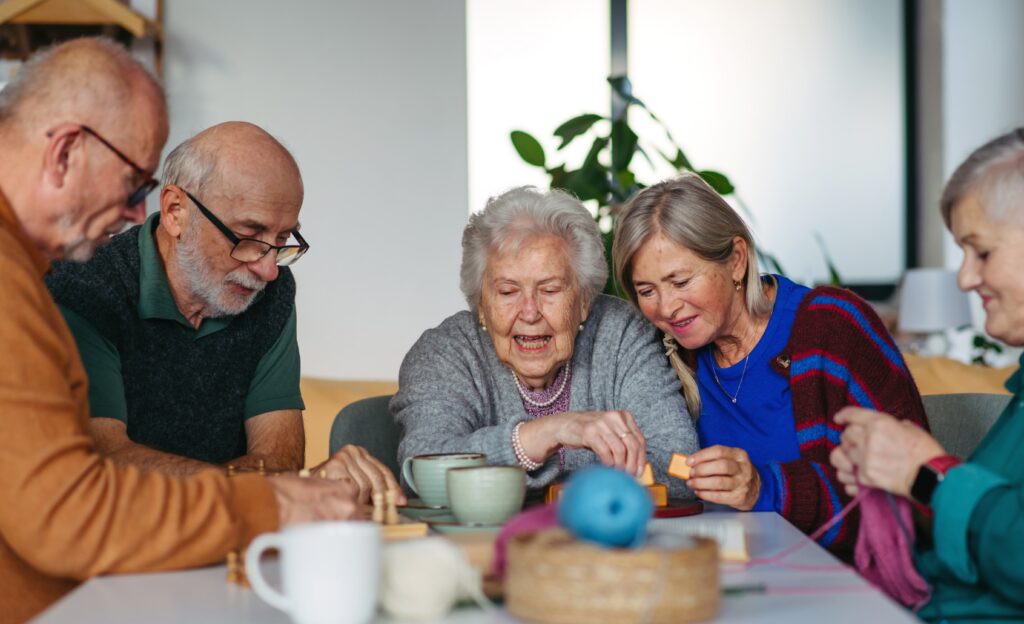
Working with seniors navigating memory changes continually reminds me that healing doesn’t always mean reversing illness. Sometimes, it is about creating spaces where dignity, connection, creativity, and joy can flourish even in the midst of challenge.
Through sound, breath, movement, and shared presence, participants reconnect with capacities that are always within them: the ability to listen deeply, breathe fully, move gently, and connect with others.
For people experiencing memory changes, and for the care partners walking beside them, these moments of presence can be profoundly meaningful. They remind us that even as memory shifts, the human capacity for presence and belonging remains vibrant and alive.
References
Black, D. S., Cole, S. W., Irwin, M. R., Breen, E., St. Cyr, N. M., Nazarian, N., Khalsa, D. S., & Lavretsky, H. (2013). Yogic meditation reverses NF-κB- and IRF-related transcriptome dynamics in leukocytes of family dementia caregivers in a randomized controlled trial. Psychoneuroendocrinology, 38(3), 348–355.
Eyre, H. A., Acevedo, B., Yang, H., Siddarth, P., Van Dyk, K., Ercoli, L., Leaver, A. M., St. Cyr, N., Narr, K. L., Baune, B. T., Khalsa, D. S., & Lavretsky, H. (2016). Changes in neural connectivity and memory following a yoga intervention for older adults: A pilot study. Journal of Alzheimer’s Disease, 52(2), 673–684.
Innes, K. E., Selfe, T. K., Khalsa, D. S., & Kandati, S. (2016). Effects of meditation versus music listening on perceived stress, mood, sleep, and quality of life in adults with early memory loss: A pilot randomized controlled trial. Journal of Alzheimer’s Disease, 52(4), 1277–1298.
Khalsa, D. S., & Newberg, A. B. (2021). Spiritual fitness: A new dimension in Alzheimer’s disease prevention. Journal of Alzheimer’s Disease, 80(2), 505–519.
Kilpatrick, L. A., Siddarth, P., Krause-Sorio, B., Milillo, M. M., Aguilar-Faustino, Y., Ercoli, L., Narr, K. L., Khalsa, D. S., & Lavretsky, H. (2023). Impact of yoga versus memory enhancement training on hippocampal connectivity in older women at risk for Alzheimer’s disease. Journal of Alzheimer’s Disease, 95(1), 149–159.
Lavretsky, H., Epel, E. S., Siddarth, P., Nazarian, N., Cyr, N. S., Khalsa, D. S., Lin, J., Blackburn, E., & Irwin, M. R. (2013). A pilot study of yogic meditation for family dementia caregivers with depressive symptoms: Effects on mental health, cognition, and telomerase activity. International Journal of Geriatric Psychiatry, 28(1), 57–65.
Porges, S. W. (2011). The polyvagal theory: Neurophysiological foundations of emotions, attachment, communication, and self-regulation. W. W. Norton & Company.
Schulz, R., & Sherwood, P. R. (2008). Physical and mental health effects of family caregiving. American Journal of Nursing, 108(9 Suppl), 23–27.
Woods, B., Aguirre, E., Spector, A. E., & Orrell, M. (2012). Cognitive stimulation to improve cognitive functioning in people with dementia. Cochrane Database of Systematic Reviews, (2), CD005562.
About the author
Moira Lo Bianco is a professional musician and trauma-informed practitioner whose work bridges sound and somatic healing. She specializes in practices that support nervous system regulation and mind-body integration, collaborating with schools, clinics, and community organizations to make her work inclusive and accessible. Moira is an Associate Professor at Berklee College of Music, serves on the Advisory Board of the Bioregulatory Medicine Institute, and is a member of the International Association for Music and Medicine (IAMM). For more information, visit moiralobianco.com.